Reduce limb-fall risk
Removing deadwood and managing end-weight on long limbs lowers the chance of breakage during high winds and storms.
Serving Alamo Heights, Texas & surrounding areas
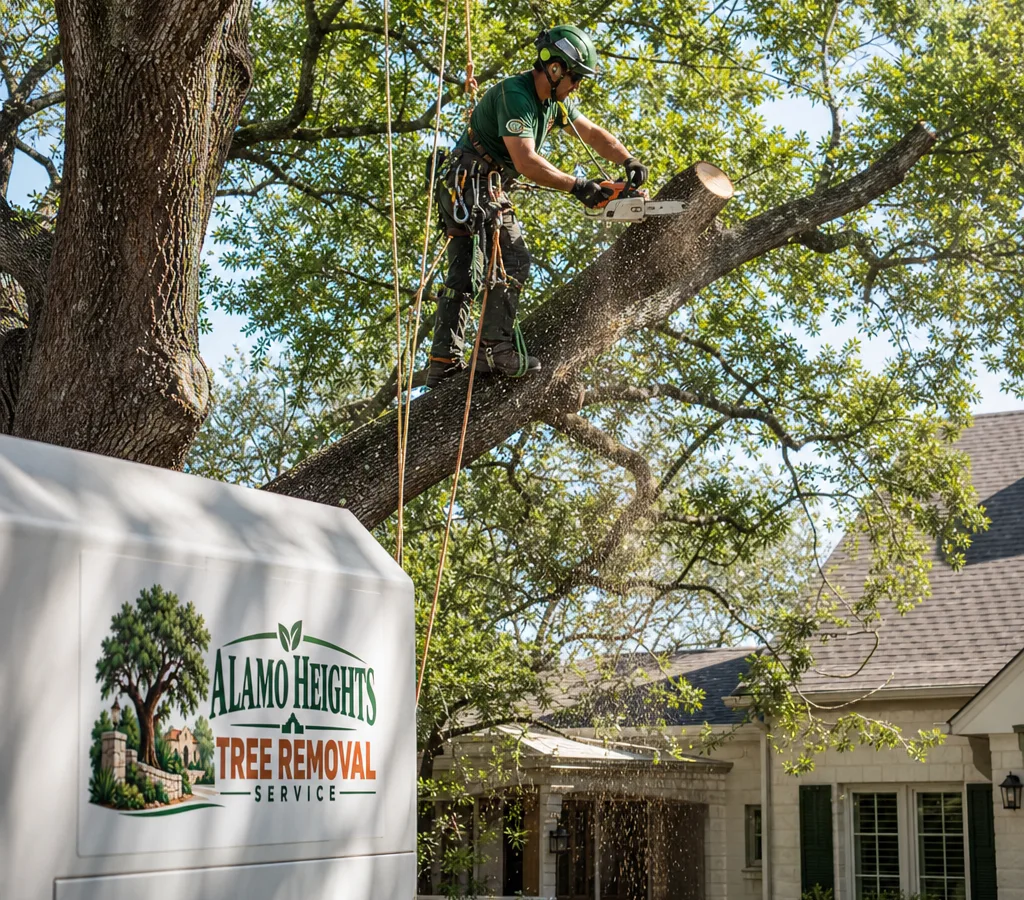
Keep trees healthy, reduce limb-fall risk, and improve clearance over roofs, driveways, and sidewalks with careful, standards-based pruning in Alamo Heights and the San Antonio area.
If you are searching for tree pruning San Antonio homeowners trust, you are usually trying to solve a practical problem: limbs over a roof, branches rubbing siding, low clearance over a driveway, or a canopy that has gotten too dense. In Alamo Heights, those issues show up fast because mature trees grow into structures over time, and wind and storms can turn weak attachments into hazards.
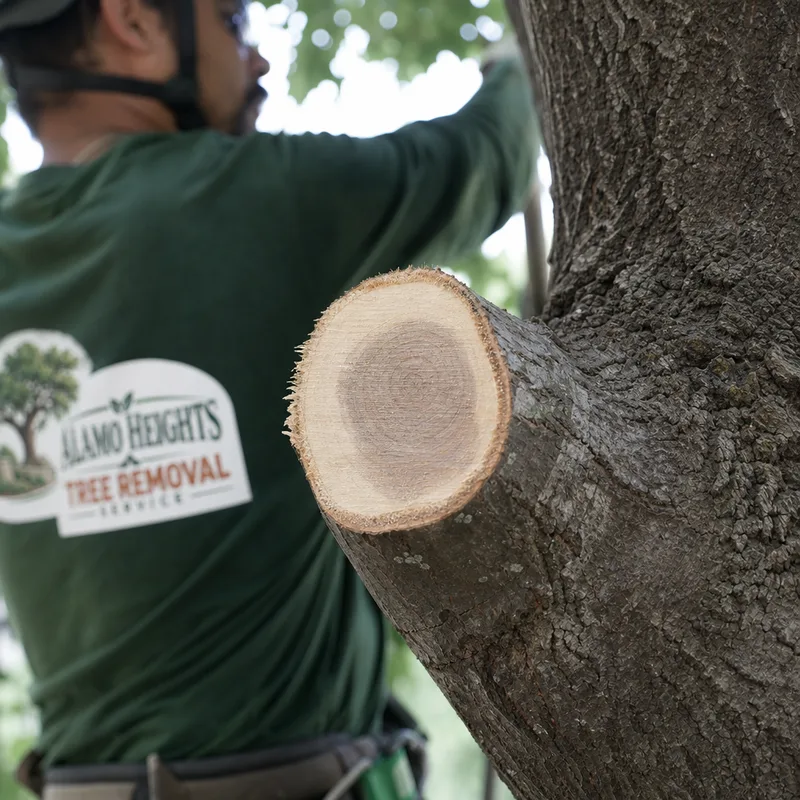
At Alamo Heights Tree Removal Service, we prune with the tree's long-term structure in mind. That means correct cuts at the branch collar, sensible reduction or thinning where it makes sense, and avoiding practices that create long-term decay or weak regrowth. The goal is not to “shape” a tree into something unnatural. The goal is to manage weight, clearance, and health so the tree holds up better over time.
You will get a clear scope before any work starts, including what will be cut and why. If the right answer is a lighter touch than you expected, we will tell you that too.
Good pruning is part biology and part risk management. We look at where limbs attach, how weight is distributed, and what the tree will do after it is cut.
Common pruning scopes we handle in the 78209 area include:
What we avoid because it causes problems:
When a tree is beyond reasonable pruning or has a serious structural defect, removal may be the safer option.
Removing deadwood and managing end-weight on long limbs lowers the chance of breakage during high winds and storms.
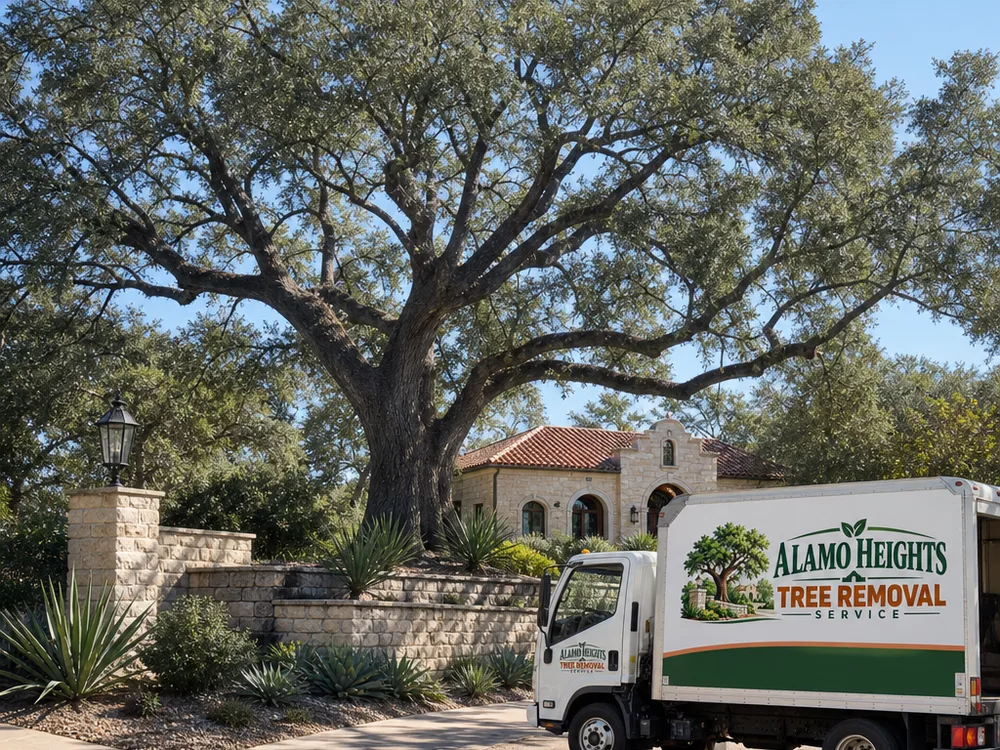
Branches that contact shingles or overhang the roof drop debris, trap moisture, and can scrape surfaces in wind. Targeted reductions help.
Raising low limbs over driveways, sidewalks, and gates improves daily access and helps keep sightlines open near the street.
Selective pruning removes rubbing and poorly attached limbs so the tree invests growth into stronger scaffold branches.
Storm-resistant pruning is about smart reductions and defect removal, not stripping the canopy.
Tree pruning in Alamo Heights typically ranges from about $250 to $900 per tree, with large mature trees or complex access often running $900 to $2,000+ depending on the scope. Light clearance or deadwood removal is usually at the lower end, while structural reductions over roofs, tight rigging zones, or multi-tree projects trend higher.
Final pricing depends on tree size and species, how much live canopy is being reduced, proximity to structures, access for equipment, haul-off needs, and whether rigging is required to prevent damage. The exact cost is confirmed after an on-site look at the tree and the surrounding targets.
A clear sequence keeps cuts purposeful, protects nearby property, and makes the finished scope easy to understand.
We walk the property with you to identify what you want solved: roof clearance, limb defects, driveway height, canopy density, or storm prep.
We mark or describe key cuts and explain the approach—reduction, thinning, raising, or deadwood removal. If the tree cannot be pruned safely, we explain alternatives.
We use drop zones, rigging, and lowering techniques when limbs are over targets like roofs, fences, or landscaping. Cuts are made at proper unions to support compartmentalization.
Brush and wood are removed as agreed, and the work area is cleaned up so you are not left with piles to deal with.
We review what was done, point out any remaining concerns, and talk about realistic intervals for future pruning based on growth and site conditions.
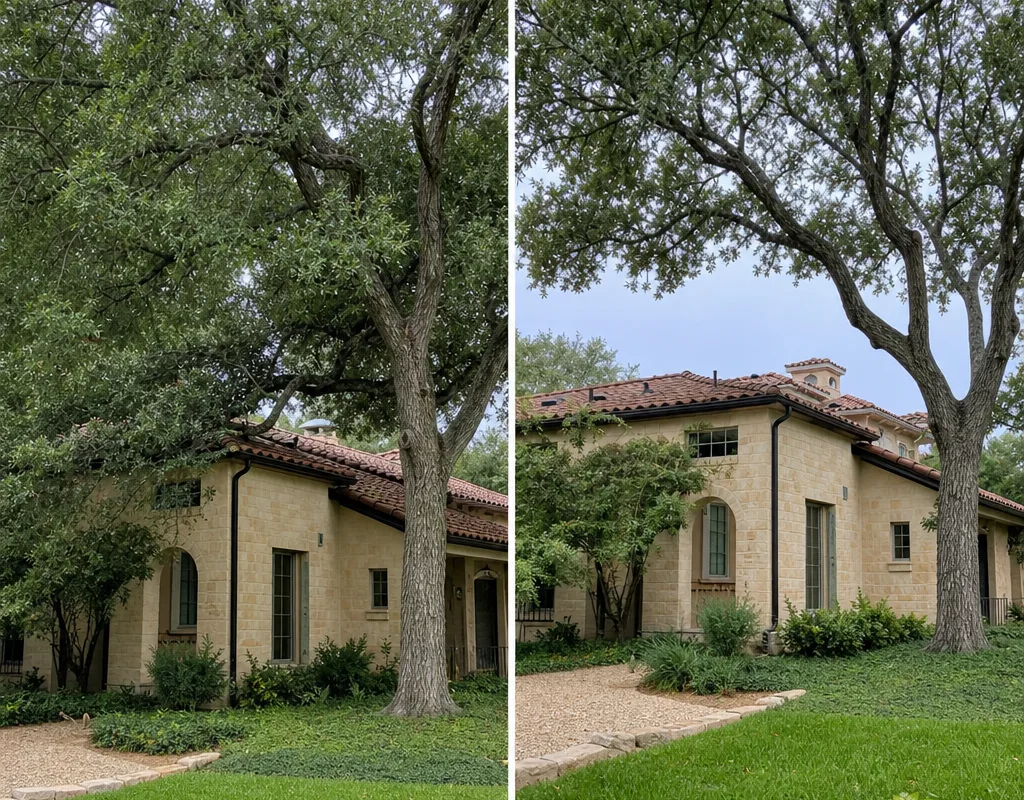
The finished tree should retain a natural, balanced canopy while gaining the clearance, structure, or risk reduction the property needs.
Book Your Free Inspection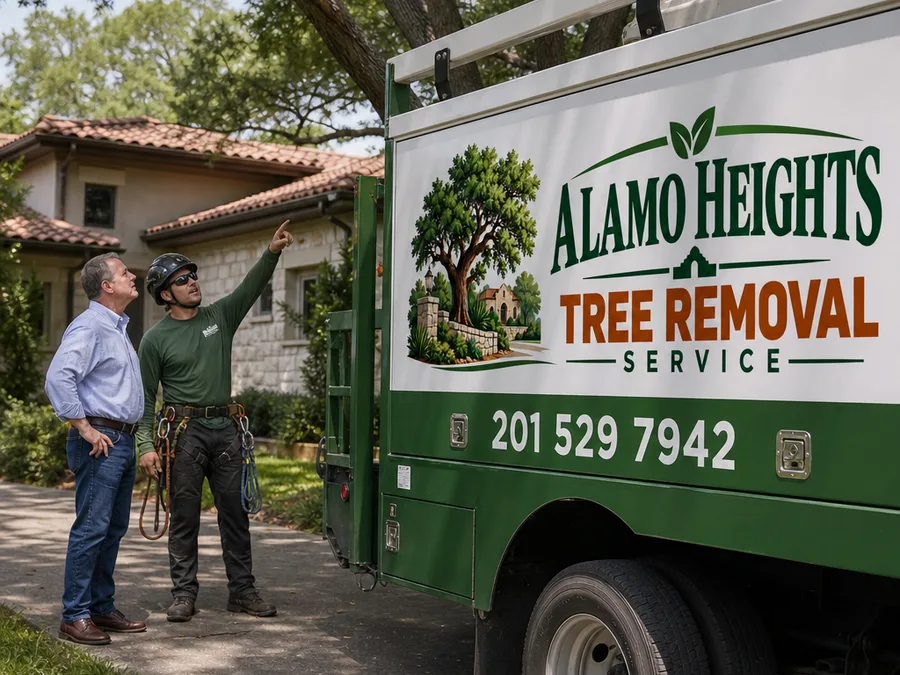
Most routine tree pruning can be scheduled any time of year, but timing depends on the species and the goal. For many shade trees, the dormant season can be a good window for structural work, while corrective and safety pruning—deadwood, broken limbs, and clearance issues—is appropriate whenever it is needed. If you have a specific species or a tree that is already stressed, we will recommend a timing and cut plan that avoids unnecessary stress.
Yes, pruning over roofs and driveways is typically done with controlled lowering and rigging so limbs do not swing or drop onto shingles, gutters, or vehicles. The approach depends on limb size, tie-in points, and what is under the work area, and we plan drop zones and protection before making larger cuts.
A conservative approach is best for most trees, and the acceptable amount depends on species, size, and overall health. The safest plan is selective pruning that targets defects, clearance conflicts, and end-weight rather than heavy canopy removal. If you are asking for a major size reduction, we will explain what is realistic while keeping a natural structure and lowering the risk of weak regrowth.
Topping is rarely appropriate because it creates large wounds and encourages fast, weakly attached shoots that can fail later. If height or spread is the issue, a better option is reduction pruning back to appropriate laterals, or in some cases a staged plan over multiple visits. If the tree cannot be reduced safely without topping-style cuts, removal may be the safer recommendation.
Haul-off can be included based on what you want done with the debris. Some customers prefer full removal, while others keep wood for firewood or leave chips for landscaping where appropriate. The scope for cleanup is agreed to upfront so the result matches your expectations.
Many residential trees benefit from periodic pruning every few years, but the right interval depends on growth rate, prior pruning history, and what the tree is near—rooflines, sidewalks, driveways, or service lines. After we see the tree, we can suggest a practical cadence so small issues are handled before they become expensive.
Tell us what you want to improve, and we will provide a written pruning scope that fits the tree, the property, and the level of risk around it.