Depth matched to your plan
Grinding depth depends on what you are doing next. Re-sodding usually needs a below-grade grind and clean backfill; replanting may need extra space for amended soil.
Serving Alamo Heights, Texas & surrounding areas
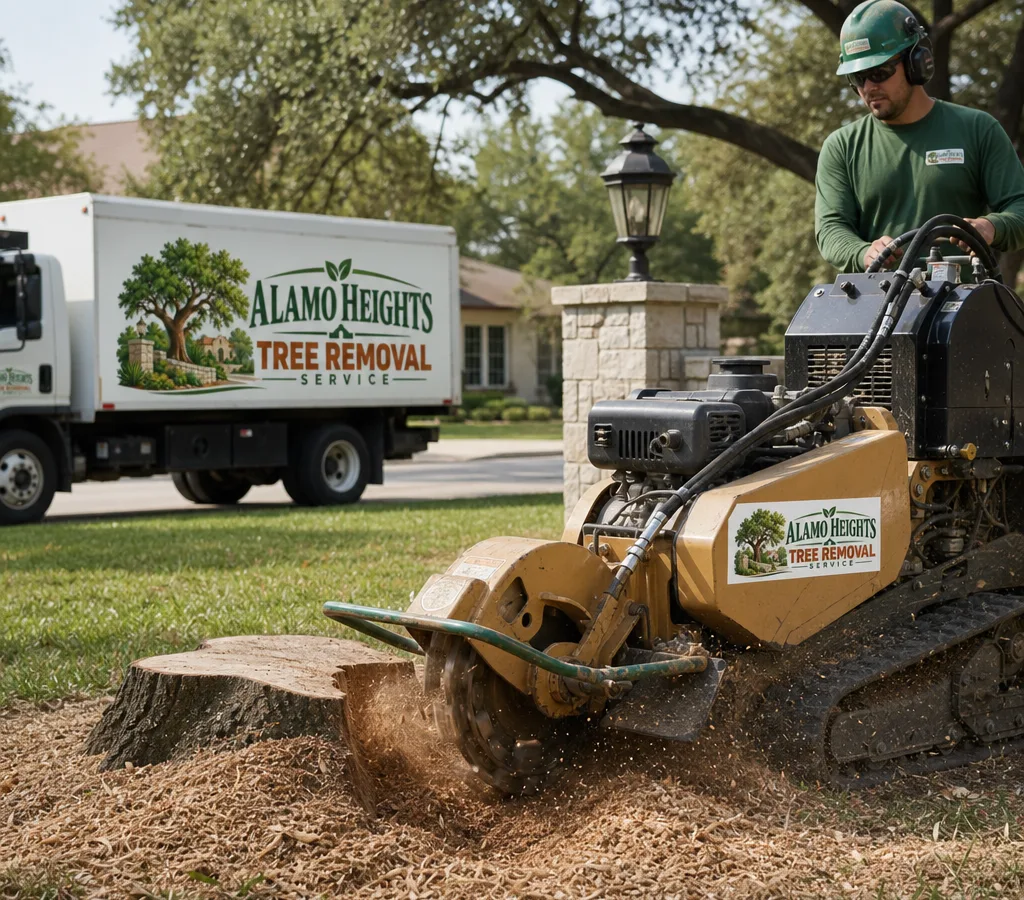
Get rid of trip hazards, mower-killing roots, and the eyesore left behind after a tree comes down. We grind stumps down below grade so you can replant, re-sod, or use the space again with a clean finish.
If you are searching for stump grinding Alamo Heights, you usually want one thing: the stump gone without turning the yard into a construction project. Stump grinding removes the visible stump and shaves the root flare down below the soil line, so the area is safer to walk across and easier to maintain.
A cut stump can linger for years. It can be a tripping hazard near sidewalks and driveways, snag a mower blade, and keep you from planting or leveling the grade. Grinding is typically the fastest way to remove the bulk of the wood without excavation. It is especially practical in established yards where you want to protect nearby landscaping.
Alamo Heights Tree Removal Service focuses this work on clean results and straightforward expectations: what depth we can grind to, what happens to the grindings, how access affects equipment choice, and what you should plan for if you are replanting or laying sod in the spot.
Stump grinding uses a rotating cutting wheel with carbide teeth to chip wood into small pieces. We position the machine over the stump, grind it down in controlled passes, and continue until the stump is below grade. The grindings are a mix of wood chips and soil.
What grinding does: removes the stump down to a depth that allows you to backfill, re-sod, or place a planter bed on top. It also reduces the surface root flare that often creates a bump in the turf.
What grinding does not do: it does not remove every root. Roots can extend far beyond the stump and stay in the soil as they break down naturally. If your plan requires full root removal for hardscape or a foundation-adjacent dig, that is a different scope than typical stump grinding.
Before we start, we look at access (gate width, slope, tight corners) and what is nearby (fences, irrigation, edging, and any utilities). That lets us choose the right grinder size and set realistic protection for your yard.
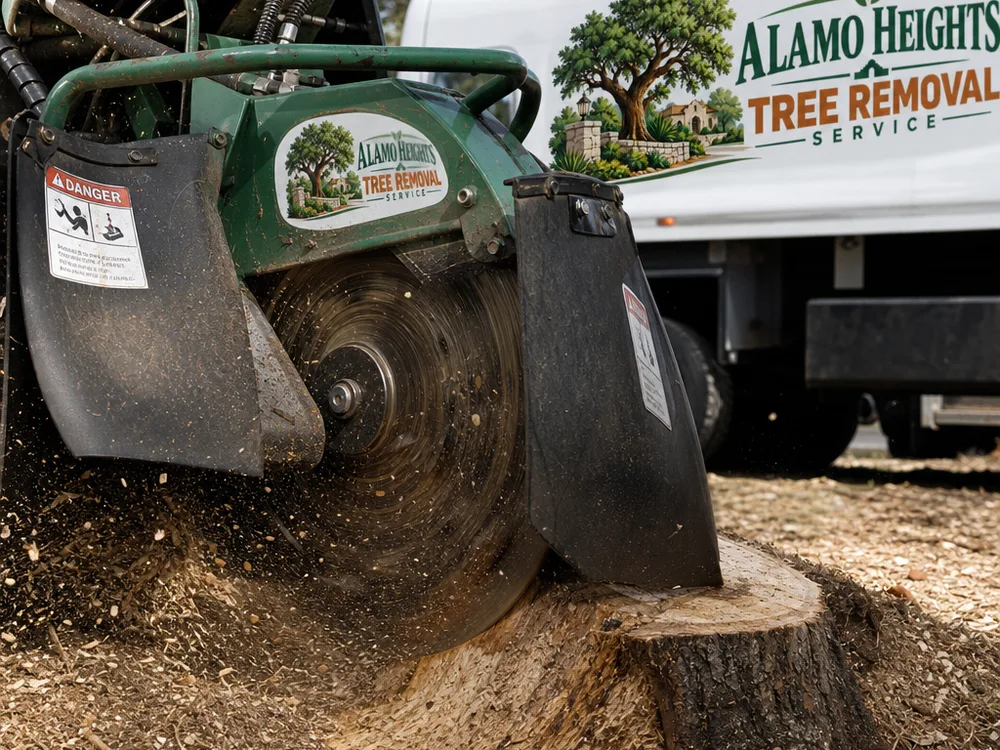
Grinding depth depends on what you are doing next. Re-sodding usually needs a below-grade grind and clean backfill; replanting may need extra space for amended soil.
We plan the approach around driveway protection, narrow gates, and tight side yards common in established neighborhoods, so the work stays controlled and predictable.
Grinding produces chips. We keep the work area contained as much as possible and finish with a tidy, usable surface, with options for handling the grindings.
We work carefully around turf, beds, and hard edges. If there are sprinklers or drip lines near the stump, flag them early so they can be avoided.
You get a plain-language description of what is included: the stump(s) to be ground, target depth, cleanup plan, and any access notes that affect the job.
Stump grinding is simple in concept, but local conditions change how the job is set up. In Alamo Heights, a few practical details come up often.
Established lots and mature landscaping: Many properties have older trees and tight planting beds near fences, driveways, or sidewalks. That can limit how we position equipment and how we manage chips. We plan the approach so the grinder stays stable and the work area remains contained.
Utility awareness: Stumps are often near where utility lines run. Even though grinding is shallower than excavation, it is still important to confirm what is underground before any work begins. If you have irrigation, landscape lighting, or a low-voltage line near the stump, marking it ahead of time helps prevent damage.
Heat and dry conditions: In the San Antonio area, warm weather can dry out topsoil quickly. After grinding, fresh backfill and sod do better with a watering plan. If you are replacing grass, it helps to schedule the follow-up work so the ground is not left as a loose depression that settles after the next rain.
If the stump is the result of a recent removal, you can start with tree removal in Alamo Heights and then schedule grinding once the site is ready. If the stump has been there for years, we can still grind it; we just plan for harder wood and surface roots that may have grown into the surrounding grade.
A clear sequence helps control chips, protect the surrounding yard, and produce the right finish for your next use of the space.
We confirm the stump size, the approach path, and what is close by (fences, beds, irrigation). We also discuss what you want to do with the area afterward.
We stage the grinder, position shields, and prepare for chip control so the grinding stays directed and the cleanup is straightforward.
We grind the stump down in passes, working side to side and stepping down until we reach the planned depth for your use of the space.
We can rake the grindings back into the hole as a temporary fill, or remove chips and backfill with soil depending on your plan for sod, planting, or leveling.
We confirm the finish level, discuss expected settling, and point out anything that may need top-off soil after a rain.
Stump grinding in Alamo Heights typically ranges from about $150 to $600 per stump, with large, old stumps or multi-stump jobs running $700 to $1,500+. A small stump with easy access is usually at the low end, while bigger diameters, heavy surface roots, and limited access push pricing up.
Your final cost depends on stump diameter at ground level, how deep you need it ground, how many stumps are on site, access (gates, slopes, tight corners), and whether chips are hauled off or left for backfill. Exact pricing is confirmed after a quick look at the stump and the approach path.
Most stump grinding is done several inches below the soil surface so the spot can be backfilled and finished, and deeper grinding is available when the plan calls for it. The right depth depends on whether you are re-sodding, planting, or placing a border or hard edge nearby, and we confirm the target depth before starting.
Leaving grindings in the hole works as short-term fill, but it can settle as the material breaks down, so topping off later is common. If you want sod to lay flat or you are planting in that spot, removing most chips and backfilling with soil usually gives a more stable finish.
Often yes, as long as there is enough room to position the grinder safely and protect nearby hard edges. Stumps tight to concrete or masonry may require a more conservative approach to avoid chipping surfaces, and we will explain any limitations during the site check.
Yes: clear the area of décor, rocks, and movable edging, and let us know about irrigation heads or landscape lighting near the stump. If you have a gate, measuring the opening helps confirm whether a larger or smaller grinder is the best fit for your yard.
Some species can send up new sprouts from remaining roots, but grinding removes the main stump and greatly reduces the chance of regrowth. If the tree was known to sucker, we can discuss options for managing sprouts in the months after grinding.
Many single-stump jobs are completed in under an hour once the machine is set up, while large stumps, multiple stumps, or limited access can take longer. We give a realistic time window after seeing the stump size and the approach path.
Send a few details about the stump location and what you want to do with the area afterward. We will confirm access, recommend a grinding depth, and provide a clear scope before scheduling.