Downed trees and large limbs
Trees across a driveway, yard, or street edge; heavy limbs that have fallen onto fences, patios, or vehicles; and storm debris that is too large to handle safely.
Serving Alamo Heights, Texas & surrounding areas
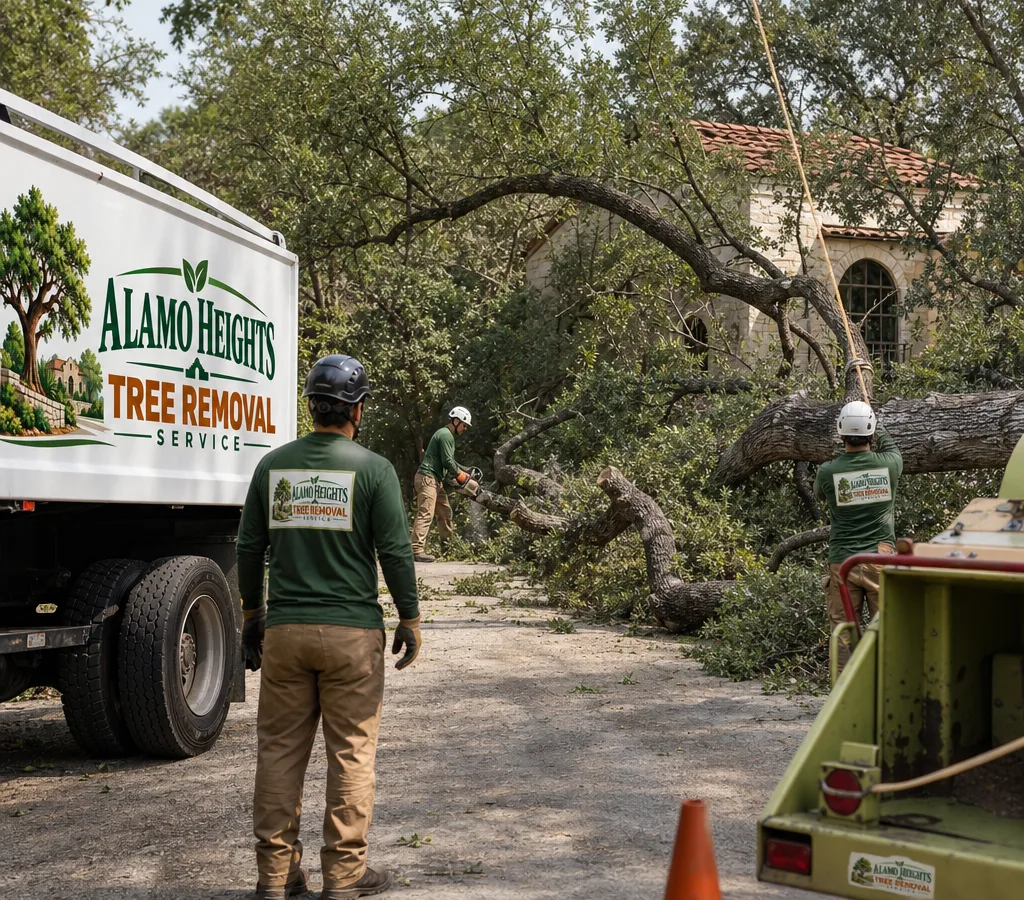
After severe weather, downed and leaning trees can block driveways, damage roofs, and pull on utility lines. We remove storm-damaged trees quickly, protect nearby structures, and leave your property safe and usable again.
If you are dealing with a downed limb, a split trunk, or a tree that is suddenly leaning after high winds, you need a plan that puts safety first. Storm damage tree removal in Alamo Heights often involves more than cutting up what is on the ground. Storm-stressed wood can be under tension, root plates can lift without warning, and broken tops can hang overhead.
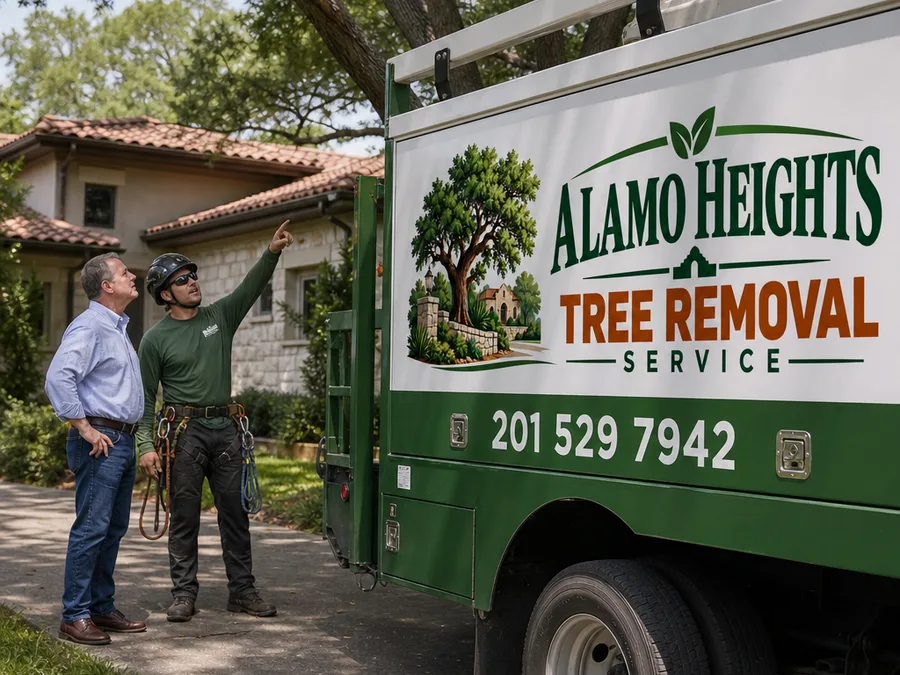
Alamo Heights Tree Removal Service handles storm-damaged trees and large limbs that are creating immediate hazards or preventing access. We focus on stabilizing the scene, removing the dangerous material with controlled cuts and rigging, and limiting additional damage to roofs, fences, driveways, and nearby trees.
If you are looking for broader help beyond storm response, you can also see our tree removal in Alamo Heights for non-emergency removals and planned work.
Trees across a driveway, yard, or street edge; heavy limbs that have fallen onto fences, patios, or vehicles; and storm debris that is too large to handle safely.
Trees with fresh vertical splits, major trunk cracks, or co-dominant stems that have separated. These often require sectional removal because the wood can shift as it is cut.
Trees that suddenly lean after wind or saturated soil, including visible root heaving. These can fail days later, even if they are still standing.
Suspended limbs, broken tops, and hung-up pieces in neighboring branches can drop without warning.
Storm removals close to homes, fences, and landscape features where controlled lowering helps keep collateral damage to a minimum.
Storm work is different from routine removal because the tree is often compromised in ways you cannot see from the ground. We start by identifying what is loaded, what is unstable, and what the tree could hit if it shifts.
Common storm scenarios we plan for include:
We keep work zones clear, use ropes and friction devices when lowering is needed, and sequence cuts so the tree releases energy in a controlled way. If a storm-damaged tree is near overhead lines, treat it as a utility hazard and keep your distance until it is assessed by the right professionals.
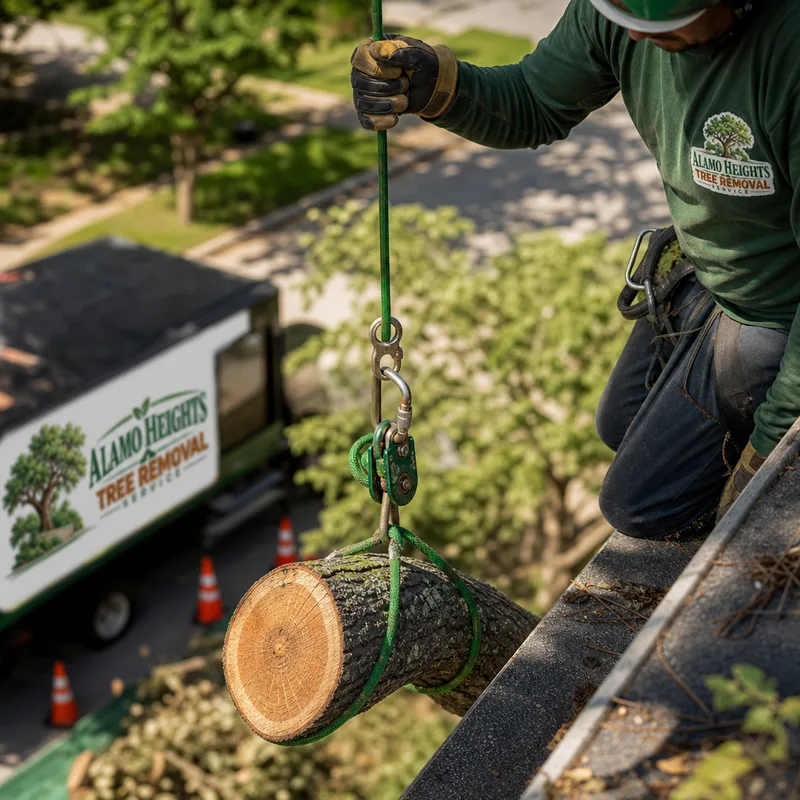
A deliberate sequence helps control unstable wood, protect nearby property, and restore safe access.
We identify hanging limbs, split trunks, leaning trees, and anything contacting a structure. Blocked driveways, walkways, and gates are prioritized.
We set safe work zones, plan how pieces will be lowered and staged, and choose staging areas that reduce debris tracking across lawns and hardscape.
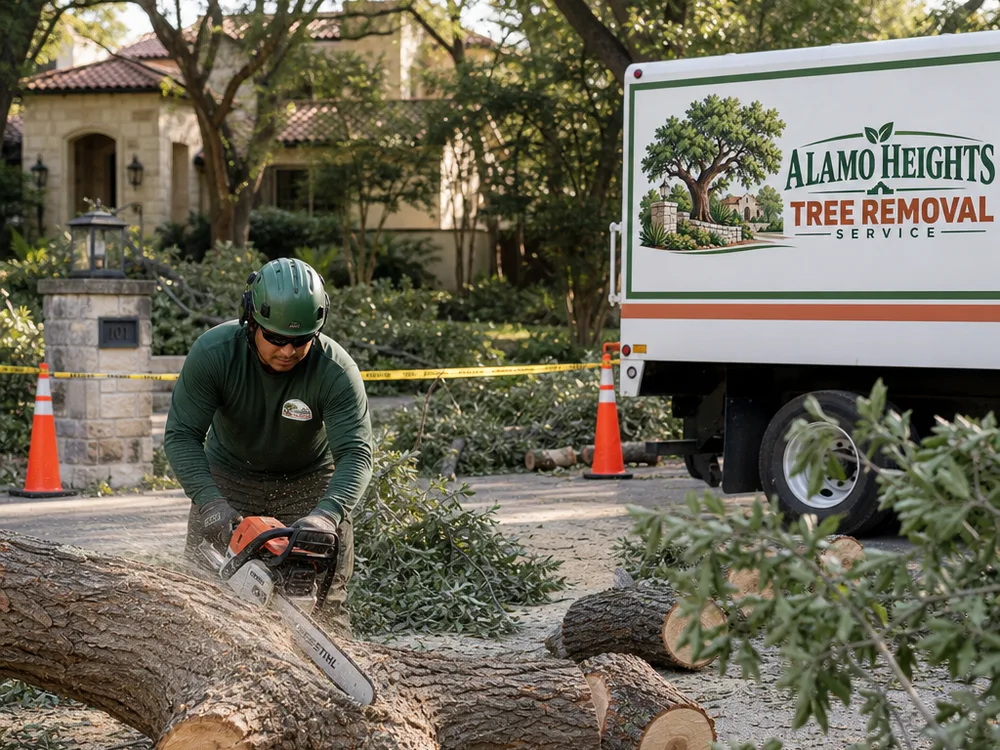
Storm-damaged trees are commonly dismantled in sections. We remove weight in a sequence that limits swing, roll, and sudden release as fibers separate.
We cut and stack or remove debris based on your preference and what is practical. Final cleanup makes the area safe to walk and drive through again.
Storm damage tree removal in Alamo Heights typically ranges from about $350 to $1,500 for a straightforward downed limb or small-to-medium tree, while complex removals near roofs, fences, or tight access commonly run $1,500 to $4,000+. Emergency conditions, heavy rigging, and multiple hazards can push costs higher.
Final pricing depends on tree size, where it landed, whether the trunk is split or loaded, access for equipment, and how much debris you want hauled away. The exact cost is confirmed after an on-site safety assessment and a written scope of work.
A few practical steps can reduce risk before a crew arrives:
When you reach out, share what the tree hit, whether access is blocked, and whether you see hanging limbs. Photos from a safe distance can help us understand the situation before arriving.
Book Your Free Inspection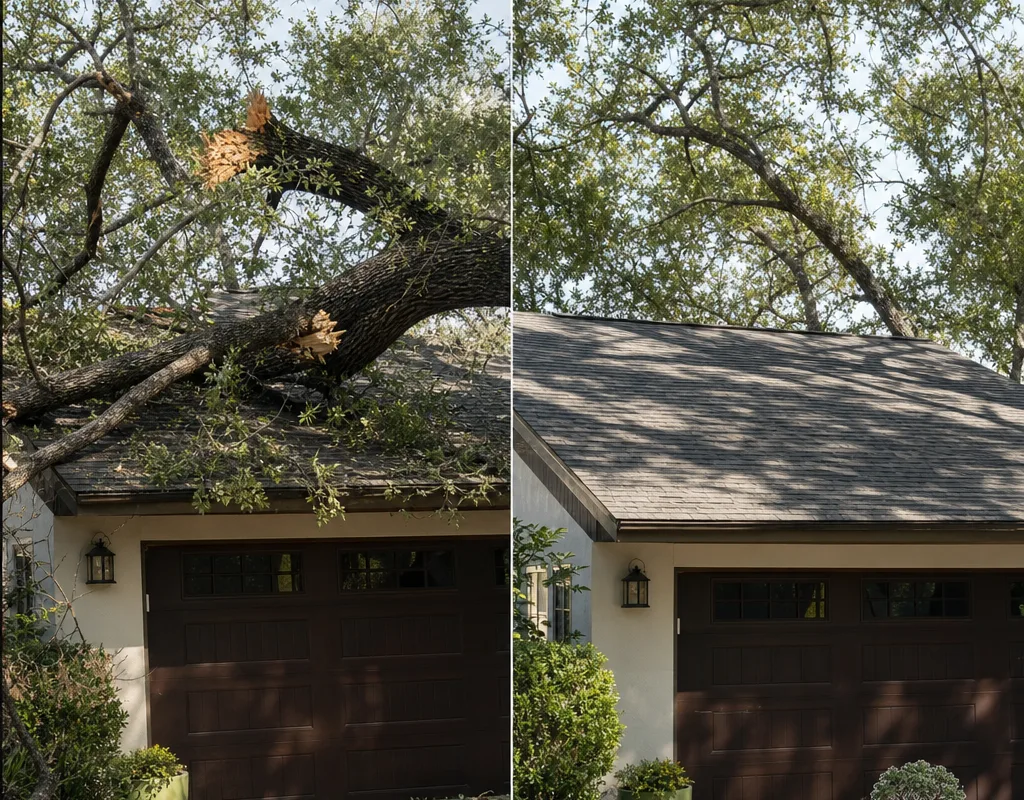
Response time depends on storm volume and the hazard level, but we prioritize jobs where a tree is on a home, blocking access, or creating an immediate safety risk. When you contact us, share whether the tree is leaning, split, hanging overhead, or touching a structure so we can triage correctly.
Yes, in many cases the safest method is sectional removal with controlled lowering so branches do not scrape or slide across shingles and gutters. We reduce weight first, then remove pieces in a sequence that limits sudden movement, and we keep debris staged away from downspouts, windows, and AC equipment.
It helps, especially if we need gate access, need you to move vehicles, or want confirmation on what to haul away versus leave as firewood-sized rounds. If you cannot be there, we can often proceed with clear access instructions and a confirmed scope, as long as the hazards and work area are visible and accessible.
Either option works, and it can affect the total cost. Many customers choose full haul-off after a storm for speed and safety, while others prefer to keep larger rounds. We can stack wood in a designated spot when access and safety allow.
A newly leaning tree after wind or heavy rain should be treated as time-sensitive because root movement and cracked wood can worsen quickly. We can assess whether it needs removal now, whether partial removal reduces risk, or whether it is stable enough to monitor.
Keep your distance and treat it as a utility hazard. If the tree is contacting or entangled with overhead lines, the safest next step is coordination so the lines can be handled appropriately before tree work proceeds, because energized lines can be hard to identify visually.
Yes. Storm damage can block drive lanes, parking areas, and entryways on commercial sites just as easily as it can damage fences and roofs at homes. The work plan is built around access, pedestrian safety, and how quickly the site needs to be reopened.
Tell us what happened and what the tree is contacting or blocking. We will help you sort urgent hazards from cleanup, provide a clear scope, and get your Alamo Heights property safe and accessible again.